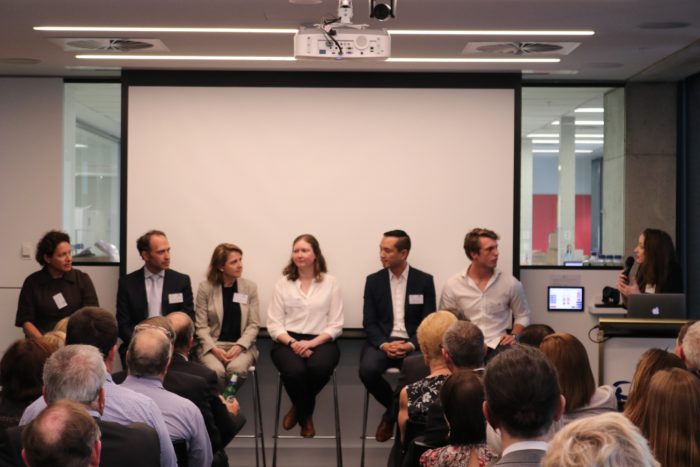
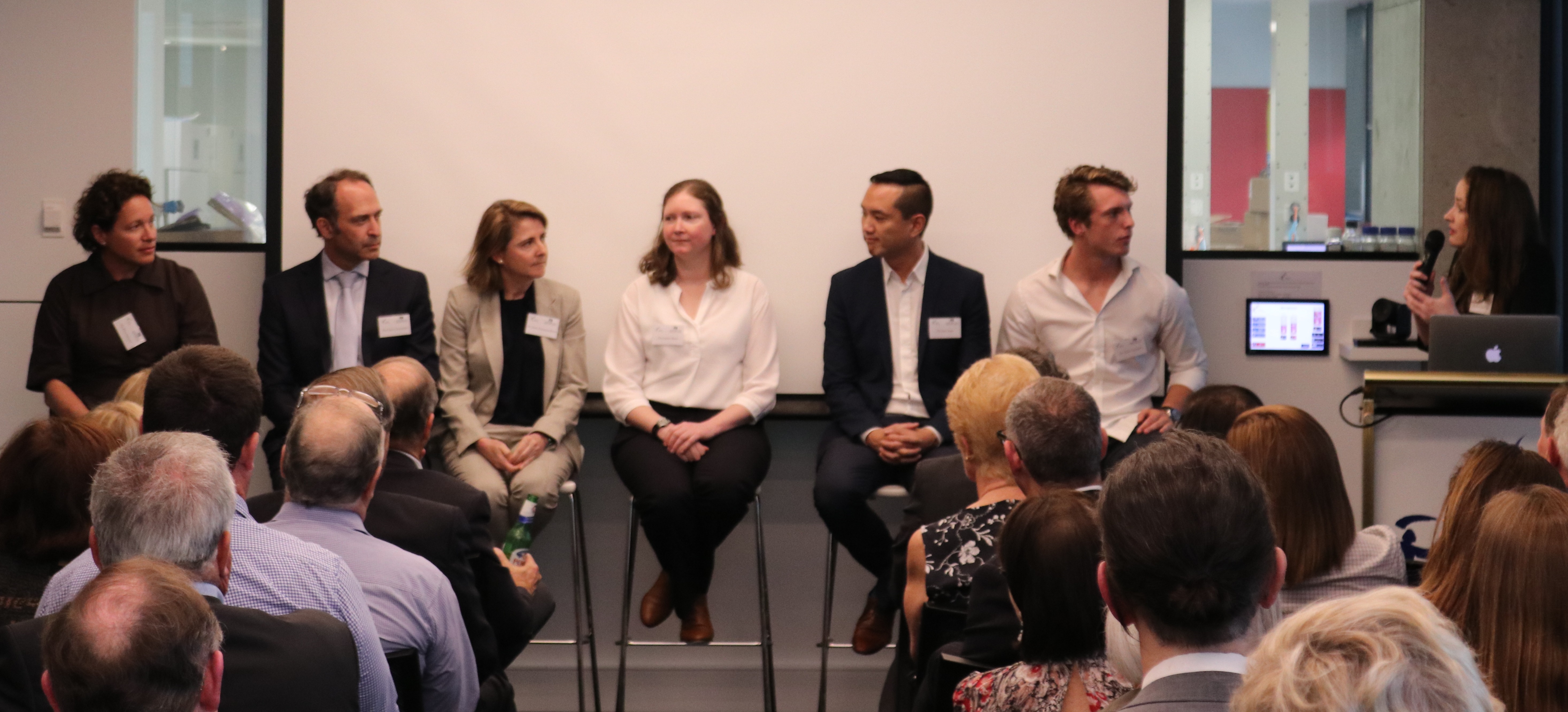
The Garvan-Weizmann Centre for Cellular Genomics has only been open for 16 months, but statistics from the Australian-Israeli medical research joint venture show it is already a hive of activity.
Guests at an information night at the Darlinghurst based centre in late November learned that the DNA of an incredible 2.63 million individual human cells that cause disease have been sequenced there so far, including tumour cells in bone and rogues cells causing autoimmune disease.
More than 20 scientists are working in the partnership across nine main complex disease research areas, more than 1500 patients are engaged in the centre’s clinical trials, and 24 peer-reviewed scientific reports have been published.
Garvan Institute’s executive director Professor Chris Goodnow said being able to zero in on the makeup and function of single cells at an unprecedented rate “is really the biggest transformation in medicine since the invention of the microscope”.
“And we’re incredibly privileged to be at the pointy end of that process,” Goodnow said.
“We’re also very fortunate to have recruited Professor Joseph Powell to lead the centre – undoubtedly Australia’s top person in this space.”
Powell said the centre’s foundation phase is almost complete so the focus will shift to larger scale research projects and “big data” leveraging to achieve tangible outcomes in early stage diagnosis for diseases and transplant rejection development of targeted cell therapies using patient-derived stem cells, and further understanding of genetic mechanisms of immune response.
The Centre’s staff are also contributing to a global flagship program called the Human Cell Atlas – the largest scientific collaboration project ever attempted.
“We want to make major leaps and really address paradigm changing questions,” Powell said.
Garvan researchers Professor Jerry Greenfield and Dr Dorit Samocha-Bonet spoke about their clinical trial in the centre that aims to predict the most effective diet and medications to treat diabetes based on an individual’s own biology, gut bacteria and body composition.
“We’re taking a paradigm the Weizmann Institute set up and applying that to a different group of individuals and common Australian foods “we’re even creating an app for it,” Greenfield said.
The event concluded with a ceremony to add Bob and Ruth Magid’s names to an honour board in recognition of their $1 million donation to the centre last May.
Weizmann Australia chairman Stephen Chipkin thanked all the centre’s donors and supporters “for your generosity, which is going to make all of us beneficiaries from the amazing work being done here”.
By Shane Desiatnik – first printed in the Australian Jewish News, 14 December 2018