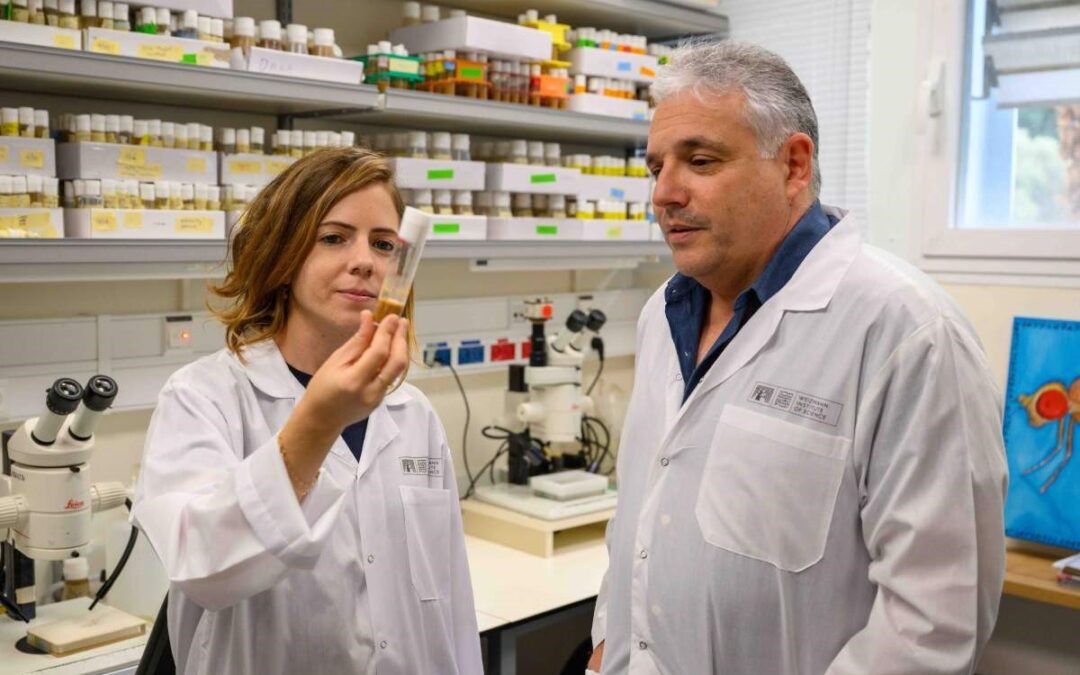

Weizmann researchers, together with Beilinson and Rambam physicians, have revealed that diverse bacteria reside within brain tumours, potentially affecting treatment efficacy and even patients’ survival.
Like a bouncer guarding the entrance to an exclusive nightclub, the blood-brain barrier – a dense layer of cells surrounding the brain’s blood vessels – is regarded as an exceptionally strict gatekeeper. It allows nutrients to pass through but blocks toxins, pathogens and even most drugs from entering the brain. Yet a new study that analysed several hundred human brain tumours shows that the brain is not the sterile environment once believed: A variety of bacteria manage to invade this fortified domain, taking up residence within brain tumours and metastases.
The research was conducted by Professor Ravid Straussman’s team at the Weizmann Institute of Science in collaboration with the Rabin and Rambam medical centres. Its findings, just published in Nature Cancer, reveal a link between the survival of patients with brain metastases and the quantity and diversity of bacteria in their tumours – and show that certain bacterial species may render tumours resistant to treatment.
Over the past decade, mounting scientific evidence has shown that bacteria inhabit a wide range of cancerous tumours. In 2020, Straussman’s group reported finding bacteria within cancer cells from the brain, bone, breast, lung, ovary, pancreas, colon and skin. While the bacterial populations of some tumours have since been investigated and well characterised, research on bacteria in brain tumours has lagged behind. Earlier studies were based on only a few samples and examined tumours originating in brain tissue, even though most brain tumours are actually metastases from other organs.
The new study, led by doctoral student Elinor Gigi, who was assisted by Staff Scientist Dr Nancy Gavert from Straussman’s lab, examined bacterial composition in glioblastoma – the most common malignant brain tumour in adults – as well as in brain metastases, most of which originated from lung and breast cancers. The research was made possible through collaboration with two physician-scientists: Professor Shlomit Yust-Katz, head of the Neuro-Oncology Unit at Rabin Medical Center (Beilinson and Hasharon Hospitals), and Dr Ayelet Shai, director of the Breast Oncology Unit at Rambam Health Care Campus.
The researchers analysed 322 samples of glioblastoma and brain metastases, identifying bacteria both inside cancer cells and within nearby immune cells. Comparisons of the bacterial populations revealed that metastases harbor greater bacterial richness than glioblastomas – meaning both a higher number of bacteria and greater diversity of their species.
“We not only found that different bacterial species are prevalent in metastases versus glioblastomas, but we identified entire bacterial families that prefer one tumour type over the other,” said Straussman.
“This supports the hypothesis that fundamentally different bacterial populations inhabit different types of brain tumours.”
Given the blood-brain barrier’s reputation as an uncompromising gatekeeper, the researchers wondered whether some of the bacteria found in brain metastases could have migrated all the way from primary tumours to the brain inside the cancer cells.
“About 36 percent of the bacterial species we found in breast cancer metastases in the brain and about 48 percent of those in lung cancer metastases, had also been detected in the corresponding primary tumours,” Straussman explained.
“We know that the blood-brain barrier’s integrity can be compromised by cancer, which may allow certain bacteria to cross into tumour cells. Another possibility is that bacteria already residing within primary tumour cells travel inside them as they metastasise to the brain.”
The researchers also found that the bacterial species common in brain metastases have metabolic traits that can promote cell migration, tissue invasion and tumour development.
“These findings raise the possibility that bacteria play an active role in cancer progression and in the infiltration of metastases into the brain,” said Straussman.
“We also found evidence of a possible symbiosis between bacteria and tumours in glioblastomas, which contained more bacteria specialising in producing phosphorus – a feature that may benefit these tumours, which often suffer from phosphorus deficiency.”
Another surprising discovery was that the bacterial composition of brain metastases correlates with their location in the brain. Tumours in the posterior region showed greater bacterial richness, while the closer they were to the anterior region, the fewer bacteria, of fewer species, were present. “We assume that varying conditions in different parts of the brain – such as differences in blood supply or in the metabolic composition of the surrounding tissue – may account for this,” Straussman explains.
Despite advances in oncology, treatment protocols for glioblastoma have hardly changed over the past few decades. They rely on surgery, radiation and the chemotherapy drug temozolomide. In the final part of the study, the researchers examined whether bacteria could affect treatment efficacy. They cultured 30 bacterial species found in glioblastoma tumours, prepared extracts containing substances secreted by these bacteria and added these extracts to human brain tumour cell lines. When the researchers then treated these cell lines with temozolomide, they found that different bacterial secretions could enhance or hinder the drug’s effectiveness. Secretions from the Bacillus genus, for example, made cancer cells resistant to chemotherapy.
Similarly, the researchers found that the survival of patients with brain metastases was affected by the bacterial populations in their tumours. Patients who survived less than one year had tumours with richer bacterial communities than those who lived more than two years. And bacteria from the Paracoccus genus, for example, were far more prevalent in patients who survived less than a year.
“Until recently, we thought of the brain as a sterile environment,” Straussman emphasised.
“The realisation that diverse bacterial populations inhabit brain tumours – and that these bacteria may play a role in cancer – compels us to rethink our assumptions and to study more deeply the effects of bacteria on disease processes in the brain,” he said.
“In the future, we must determine whether bacteria also exist in the healthy brain, and map which bacteria inhabit the cells of each body organ – in health and disease alike. The discoveries about specific bacterial species involved in treatment resistance and patient survival offer hope that, one day, we may develop new, targeted cancer therapies.”
According to Professor Yust-Katz, of Rabin Medical Center, glioblastoma is a highly aggressive malignant brain tumour and even after treatments, such as surgery, radiation, chemotherapy and biological therapy, life expectancy remains very limited.
“The discovery of bacteria within tumours opens the door to future studies on the role of these bacteria in the disease, with the hope of finding new ways to help patients,” he said.
Dr Shai, of Rambam Health Care Campus, added: “In recent years, more patients have been diagnosed with brain metastases, which are especially difficult to treat. The challenge stems both from the location of the metastases, which can impair cognitive and physical functions, and from their biological makeup, which often renders them resistant to existing therapies.
“This study revealed that brain tumours contain diverse bacterial communities that can influence immune responses and inflammation in the tumour microenvironment. These findings bring us one step closer to more effective diagnosis and treatment.”
Also participating in the study were Dr Lilach Raijman-Nagar, Dr Yaara Zwang, Hofit Zemach and Dr Ilana Livyatan from Weizmann’s Molecular Cell Biology Department; Dr Adva Levy-Barda, Dr Yossi Laviv, Dr Andrew A. Kanner, Dr Alexandra Amiel, Professor Tali Siegal and Dr Suzana Horn from the Rabin Medical Center (Beilinson and Hasharon); Dr Anca Leibovici and Dr Inna Selezen from the Galilee Medical Center; Dr Omar Badran from HaEmek Medical Center; Dr Yaniv Zohar and Dr Esraa Safadi from the Rambam Health Care Campus; Dr Lyndsey L. Prather, Professor Patricia Castro and Professor Jacob J. Mandel from the Baylor College of Medicine, Houston, Texas; Dr Cassandra R. Helfer from Northwestern University, Chicago, Illinois; Professor Iris Barshack from Sheba Medical Center, Tel Hashomer; Dr Tali Dadosh and Dr Smadar Levin-Zaidman from Weizmann’s Chemical Research Support; Dr Inna Goliand and Ofra Golani from Weizmann’s Life Sciences Core Facilities Department; and Professor Noam Shental from the Open University.