A group at the Weizmann Institute of Science has demonstrated the production of protein assembly lines on a silicon chip.
Scientists searching for better diagnostic tests, drugs or vaccines against a virus must all begin by deciphering the structure of that virus. Plus when the virus in question is highly pathogenic, investigating, testing or developing these can be quite dangerous.
Weizmann’s Professor Roy Bar-Ziv, Staff Scientist Dr Shirley Shulman Daube, Dr Ohad Vonshak, a former research student in Bar-Ziv’s lab, and current research student Yiftach Divon have an original solution to this obstacle. They demonstrated the production of viral parts within artificial cells.
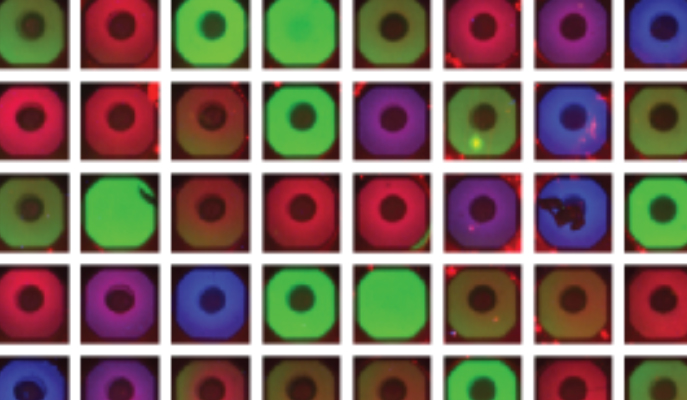
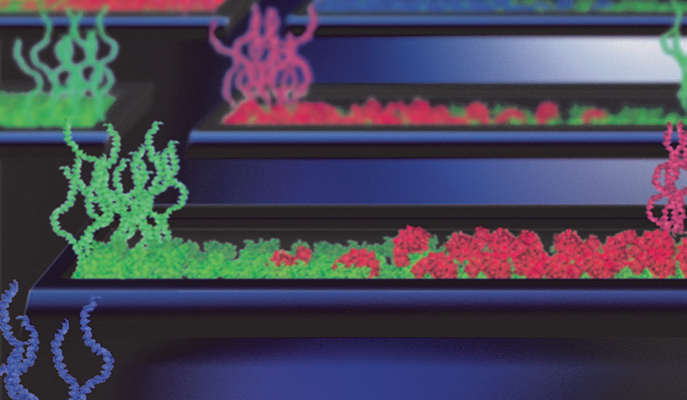
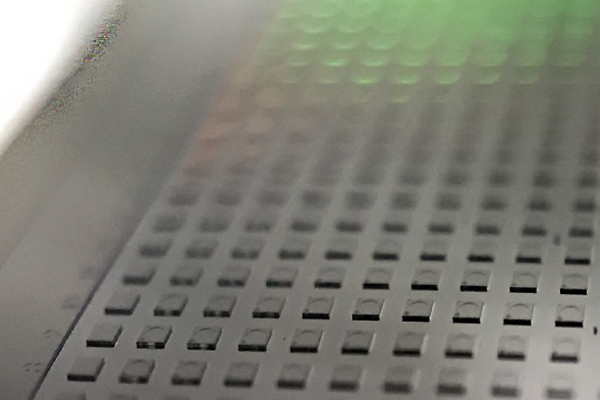
The cells are micrometre-sized compartments etched into a silicon chip. At the bottom of each compartment, the scientists affixed DNA strands, packing them densely. The edges of the artificial cells were carpeted with receptors that can capture the proteins produced within the cells.
To begin with, the scientists flooded their cells with everything needed to make proteins – molecules and enzymes needed to read the DNA information and translate it into proteins. Then, with no further human intervention, the receptor carpet trapped one of the proteins produced in the bottoms of the cells, with the rest of the viral proteins binding to one another, producing structures that the scientists had earlier ‘programmed’ into the system. In this case, they created assorted small parts of a virus that infects bacteria (a bacteriophage).
“We discovered, that we can control the assembly process – both the efficiency and the final products – through the design of the artificial cells,” said Bar-Ziv.
“This included the cells’ geometric structure, and the placement and organisation of the genes. These all determine which proteins will be produced and, down the line, what will be made from these proteins once they are assembled.”
Vonshak added: “Since these are miniaturised artificial cells, we can place a great many of them on a single chip. We can alter the design of various cells, so that diverse tasks are performed at different locations on the same chip.”
The features of the system developed at the Weizmann Institute – including the ability to produce different small parts of a single virus at once, could give scientists around the globe a new tool for evaluating tests, drugs and vaccines against that virus.
“Because the artificial parts – even if they faithfully reproduced parts of the virus – do not include the use of actual viruses, they would be especially safe from beginning to end,” said Divon.
While Sulman Daube added: “Another possible application might be the development of a chip that could rapidly and efficiently conduct thousands of medical tests all at once.”
Participating in this research were Stefanie Förste, Dr Sophia Rudorf and Professor Reinhard Lipowsky from the Max Planck Institute of Colloids and Interfaces in Potsdam, Germany, and David Garenne and Professor Vincent Noireaux from the University of Minnesota. The research was published today in Nature Nanotechnology.