A new video series from the Weizmann Institute of Science’s Levinson Visitor’s Center is being produced where Weizmann Institute scientists and employees speak of their favorite spots and hidden gems on campus.

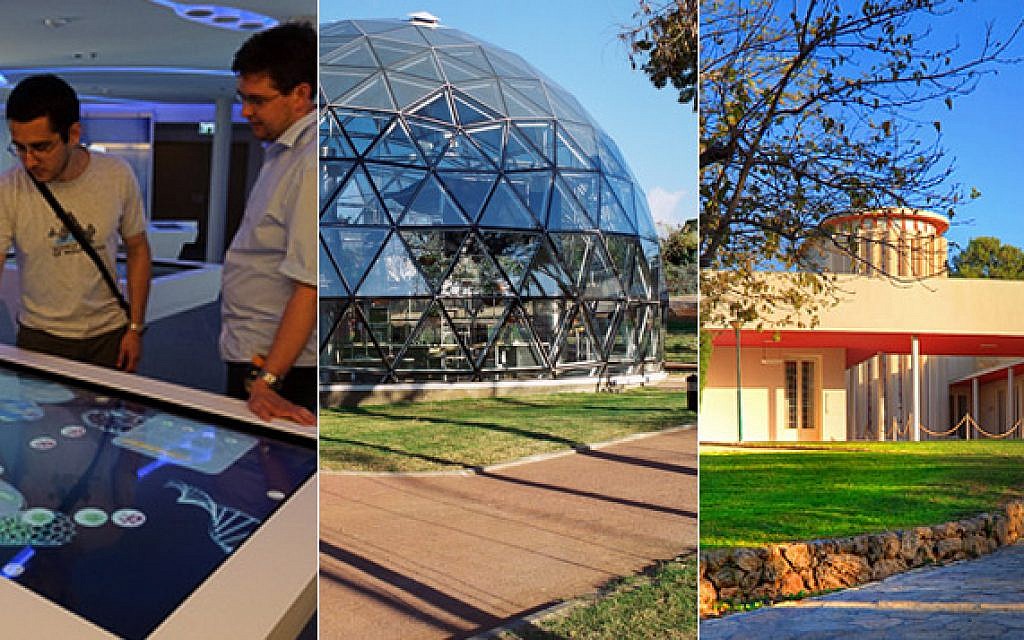
A new video series from the Weizmann Institute of Science’s Levinson Visitor’s Center is being produced where Weizmann Institute scientists and employees speak of their favorite spots and hidden gems on campus.
Share this article

The blockbuster drug Viagra may strengthen a newly discovered cholesterol-regulating mechanism that could be harnessed to curb cancer spread, according to new collaborative research at the Weizmann Institute of Science. Viagra was originally developed to treat high...

A Phase 1 clinical trial has reported positive results for a brain-protective immunotherapy in early Alzheimer's disease, a therapy based on work from the Weizmann Institute of Science. Dozens of research teams around the world are working to halt, treat and even...

A new study suggests that magnetic surfaces may influence not only the ‘handedness’ of biological molecules, but also their isotope composition – connecting two fundamental fingerprints of life. The study, offering new clues to the origin of life on Earth, began at a...

Weizmann Institute scientists have deciphered how a well-known psychedelic substance is created, and now they have engineered a plant to produce several psychedelics at once. Long before scientists began studying them in the lab, mind-altering substances were already...

A Weizmann-led team has proposed a simple but powerful new method for detecting traces of alien biology, whether on Jupiter’s icy moons, in meteorites or in Martian samples. Before any wrinkled, wide-eyed creature from a distant civilisation asks to be taken home, the...

Israeli and Czech scientists have recreated the coronavirus’ evolutionary journey in a test tube – revealing the conditions that can produce highly contagious variants. A key step in the origin of many pandemics occurs when an animal-borne virus infects humans and...

Weizmann Institute of Science researchers have discovered immune memory cells capable of producing antibodies against cancer – a finding that opens new avenues for future cancer vaccines. While we tend to quickly forget having been ill or having received a vaccine,...

Weizmann Institute of Science and Hebrew University of Jerusalem scientists may have solved a 150-year-old puzzle about why life favours one mirror-image molecule over another. Imagine looking at yourself in the mirror, only to find that your reflection is governed by...

Weizmann Institute of Science and Hebrew University of Jerusalem scientists have discovered that stem cell maturation can also serve as an immune defence mechanism. We all begin life as a collection of embryonic stem cells that have a remarkable ability to mature into...

An international research team led by the Weizmann Institute of Science has uncovered a key mechanism of prostate cancer treatment resistance and points to a potential combination therapy for patients. Most prostate cancers rely on male sex hormones, known as...