Researchers at the Weizmann Institute of Science have produced the first global estimate of the combined weight of all land insects and related arthropods.
Arthropods crawl and buzz around us in the wild and on farmlands, on the street and at home, under our floors and in our plumbing systems, even in our food and on our bodies. But while we often are inconvenienced by this group of invertebrates – which comprises more than a million species, including all insects – their absence would be catastrophic: Arthropods are ecosystem engineers that pollinate our crops, turn over agricultural soils and sustain an enormous diversity of predators, from warblers to wolverines that feed on them directly or indirectly.
Yet, despite their crucial importance to the environment and humanity, and despite data suggesting a worrying decline in their numbers in areas impacted by human activity, scientists did not have holistic, global answers to basic questions about arthropods, such as how many of them are out there and how much they weigh collectively.
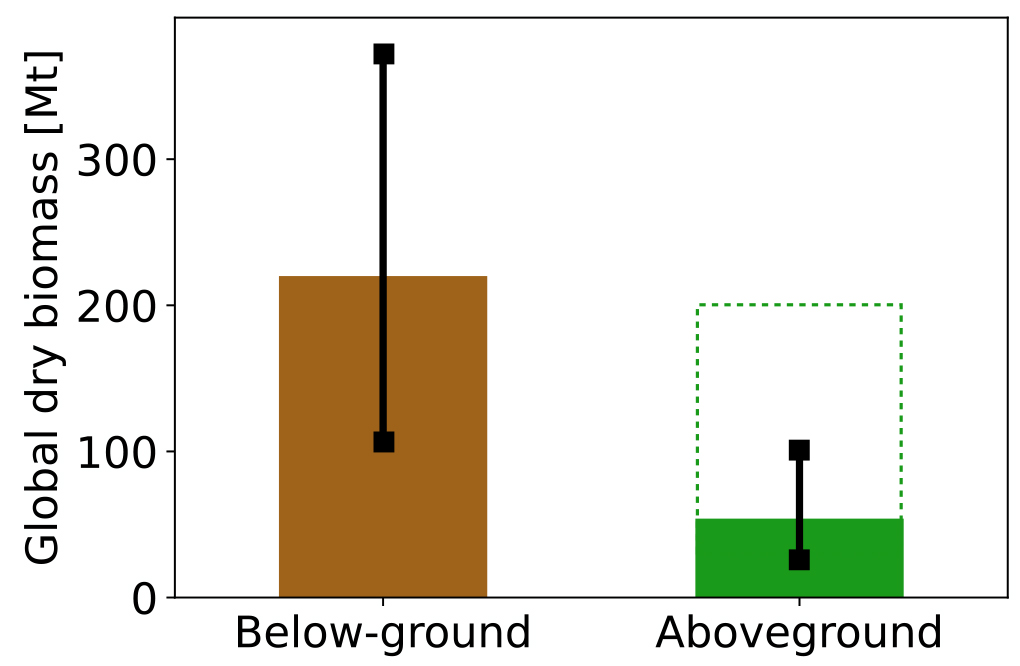
Weizmann researchers have now taken a significant step toward answering these questions. In a study just published in Science Advances, a team headed by Professor Ron Milo has calculated that the total biomass, or collective weight, of terrestrial arthropods is about one billion tons, which is roughly the same as that of all people (about 400 million tons) and all farm animals (about 600 million tons) combined.
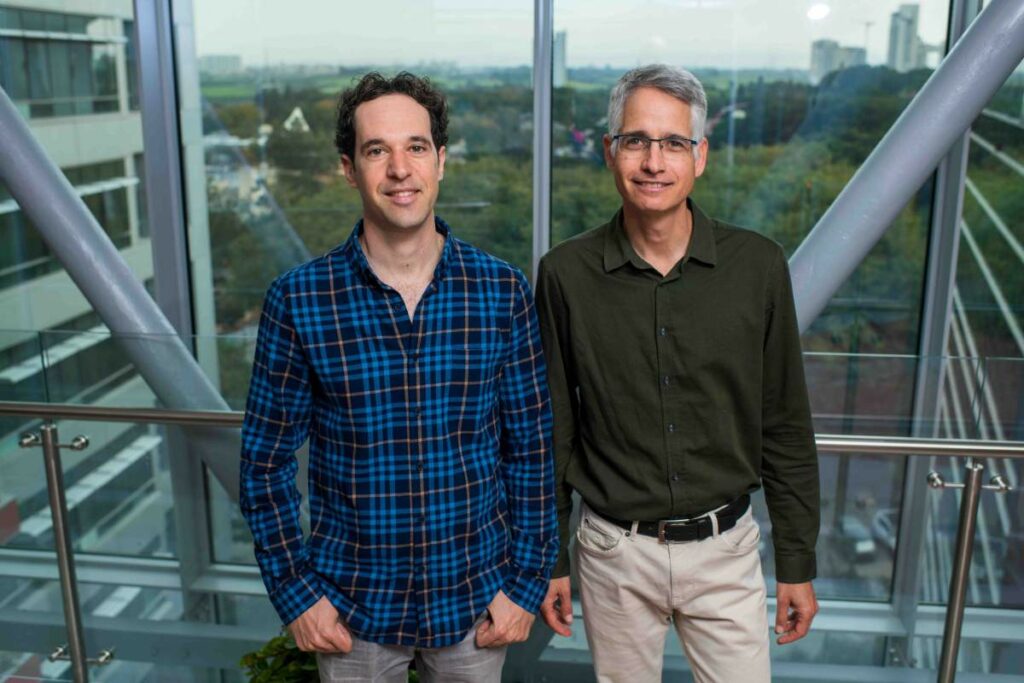
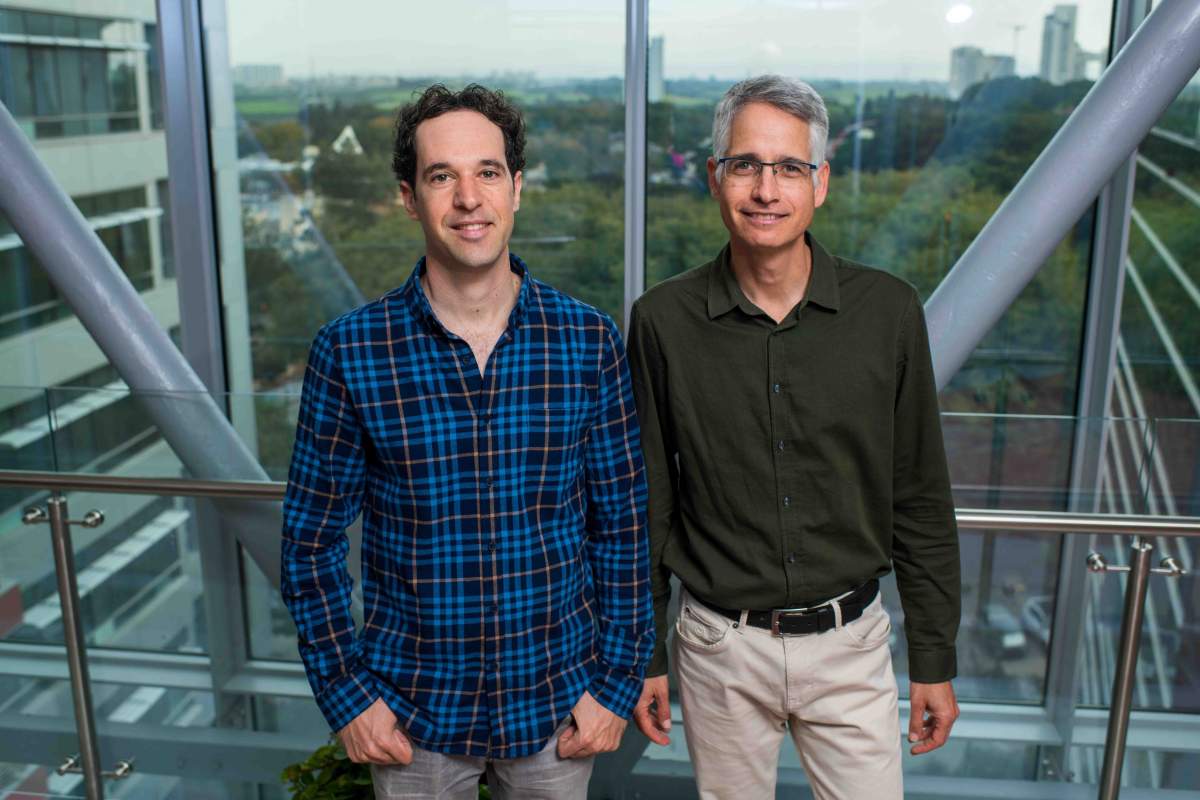
“Arthropods have been described as ‘the little things that run the world’ because of their central role in multiple ecological processes. We must take them into account if we’re to fully understand humanity’s impact on the planet and the possible consequences of climate change,” said Dr Yuval Rosenberg, who, along with Dr Yinon M. Bar-On, led the study in Milo’s lab at Weizmann’s Plant and Environmental Sciences Department.
“Quantifying arthropod populations establishes a baseline against which we can measure future changes to the arthropod communities and how these changes, in turn, could affect global processes.”
The researchers gathered data from thousands of observations conducted over the years at some 500 survey sites around the world. These sites represent various biomes, ranging from rain forests to deserts, and also agricultural areas. The scientists examined data on arthropod biomass both below and above the ground, for example on plants.
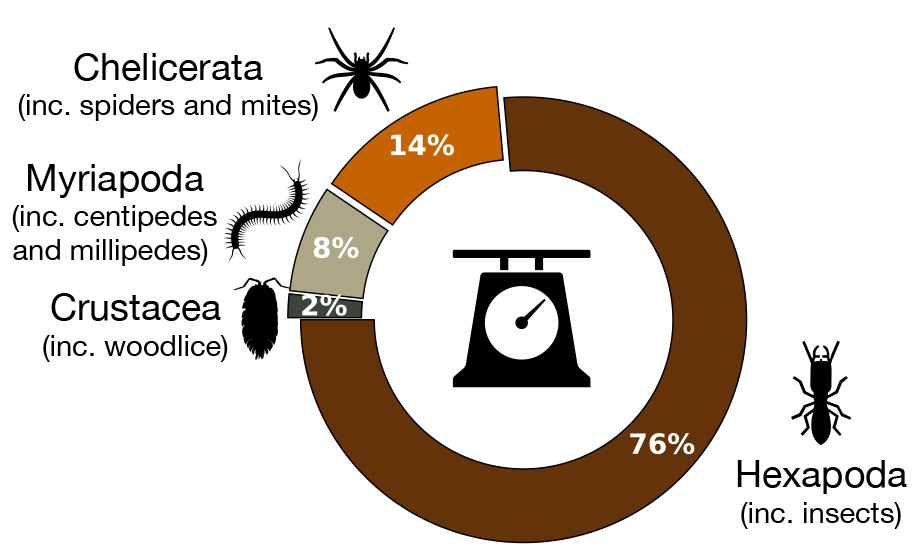
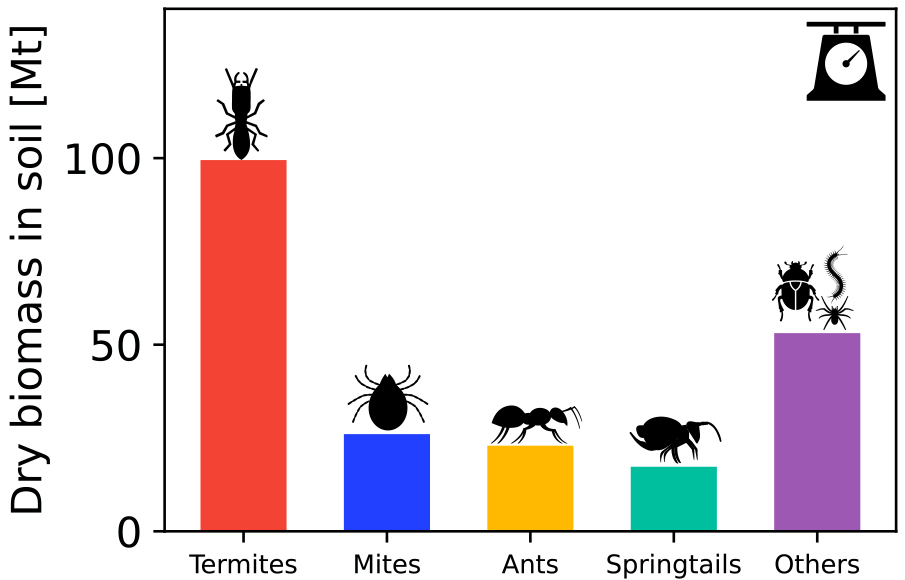
The study shows that the bulk of terrestrial arthropods’ biomass belongs to creatures that live underground – including springtails and mites, tiny animals that are critically important for the rich ecology of the subterranean world.
Underground arthropods are responsible for processes that fertilise the soil and affect the global carbon cycle. They prey on other organisms, maintaining an ecological balance. The researchers calculated that the number of individual arthropods underground is about 10 quintillion, or 10 billion billions.
Social insects that live in colonies account for half of the mass of underground arthropods: Termites and ants constitute 40 and 10 percent of that category, respectively. As for aboveground arthropods, most of their biomass is probably found in tropical forests, and it includes many familiar arthropods such as butterflies, ants, beetles, grasshoppers and spiders.
“We often examine arthropods from a biological diversity perspective, or the number of species. That’s an extremely important prism, but it can sometimes distort our understanding of the relative share of various kinds of arthropods and their impact on ecological processes,” Rosenberg said.
“Species with many individuals, or a large collective weight, will usually have a greater impact than rare species,” he added.
“Quantifying the global mass of arthropods helps develop a more accurate and relevant perspective on diverse ecological processes and promotes a holistic, quantitative understanding of the arthropods’ roles in the global ecology.”
“This research offers the general public a number of insights,” said Milo, whose lab in recent years has led several studies that map the global biomasses of various species groups.
“The figure corrects the impression that we’re dealing with infinite, inexhaustible arthropod populations. Despite their broad distribution, that is not the case. Arthropods are strongly impacted by human and climatic influences, which in turn makes our ecological systems vulnerable.”
For example, Milo’s team has reported that agricultural land has far fewer arthropods than do woods and forests in the same climate zone.
“The health of our ecological systems depends to a great extent on the condition of arthropod populations. They are a massive force when it comes to regulating vegetation. Thousands of species of birds, reptiles and amphibians depend on them for food and, ultimately, arthropods help break up and recycle dead plants and animals, as well as their excrement,” said Rosenberg.
“This has huge implications for us as well. Even a service that may seem minor, like breaking up excrement, not only fertilises the soil but prevents disease and pest outbreaks. Therefore, arthropod populations’ decline across the globe calls for monitoring their situation carefully. A broad, quantitative view can help us assess how our ecological systems may change, and how this might affect our health, economy, agriculture and quality of life.”
The study’s participants included Amir Fromm, Meital Ostikar, Aviv Shoshany and Omer Giz of the Weizmann Institute of Science’s Plant and Environmental Sciences Department.