Is a pair of brain structures called the olfactory bulbs, which are said to encode our sense of smell, really essential?
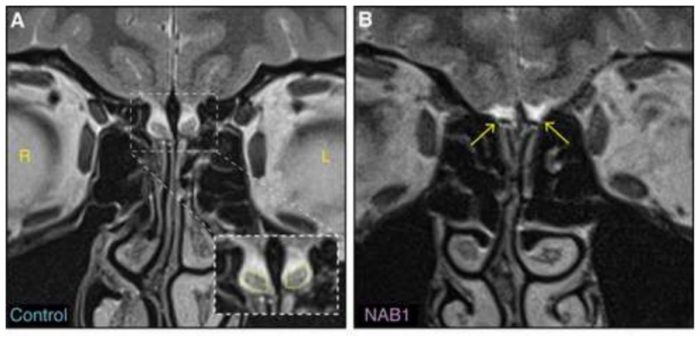
Weizmann Institute of Science researchers has shown that some humans can smell without olfactory bulbs. Their finding around 0.6% of women and up to 4% of left-handed women, have completely intact senses of smell despite having no olfactory bulbs in their brains.
This research, recently published in Neuron, questions the accepted notion that olfactory bulbs are necessary for smell and may shake up certain conventional theories that describe the workings of our sense of smell.
In the majority of people who have functioning olfactory bulbs, nerve signals from receptors in the nose go first through the bulbs before passing onwards toward the olfactory centre in the cortex. The prevailing theory has the olfactory bulbs combining the information from the six million receptors in our noses, some 400 different types, and encoding a unique ‘odour’ signal to be passed on. Unsurprisingly, some people who are congenitally anosmic ‒ that is, they never had a sense of smell ‒ have no olfactory bulbs.
Although the centrality of the olfactory bulbs in olfactory perception is the ‘textbook”‘view, in the 1980s and 1990s some researchers had removed the olfactory bulbs from the brains of rodents and found their sense of smell to remain functional. These findings, however, were not well received in the scientific community.
The new findings were unexpected: Drs Tali Weiss and Sagit Shushan in the lab of Professor Noam Sobel of the Institute’s Neurobiology Department were conducting MRI scans of subject’s brains in the Azrieli National Institute for Human Brain Imaging and Research on campus. One of the subjects, who had stated her sense of smell was normal, was found to be lacking olfactory bulbs in her brain. The subject insisted that her sense of smell was not only normal, it was excellent.
“We tested her smelling faculties in every way would could think of, and she was right,” said Sobel.
“Her sense of smell was indeed above average. And she really doesn’t have olfactory bulbs. We conducted another scan with especially high-resolution imaging, and saw no signs of this structure.”
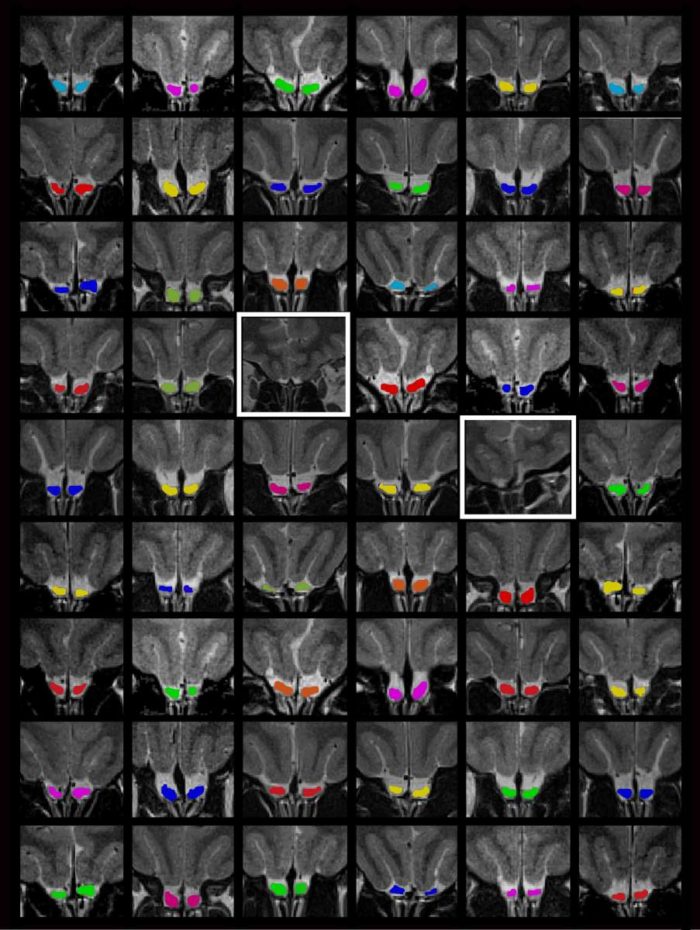
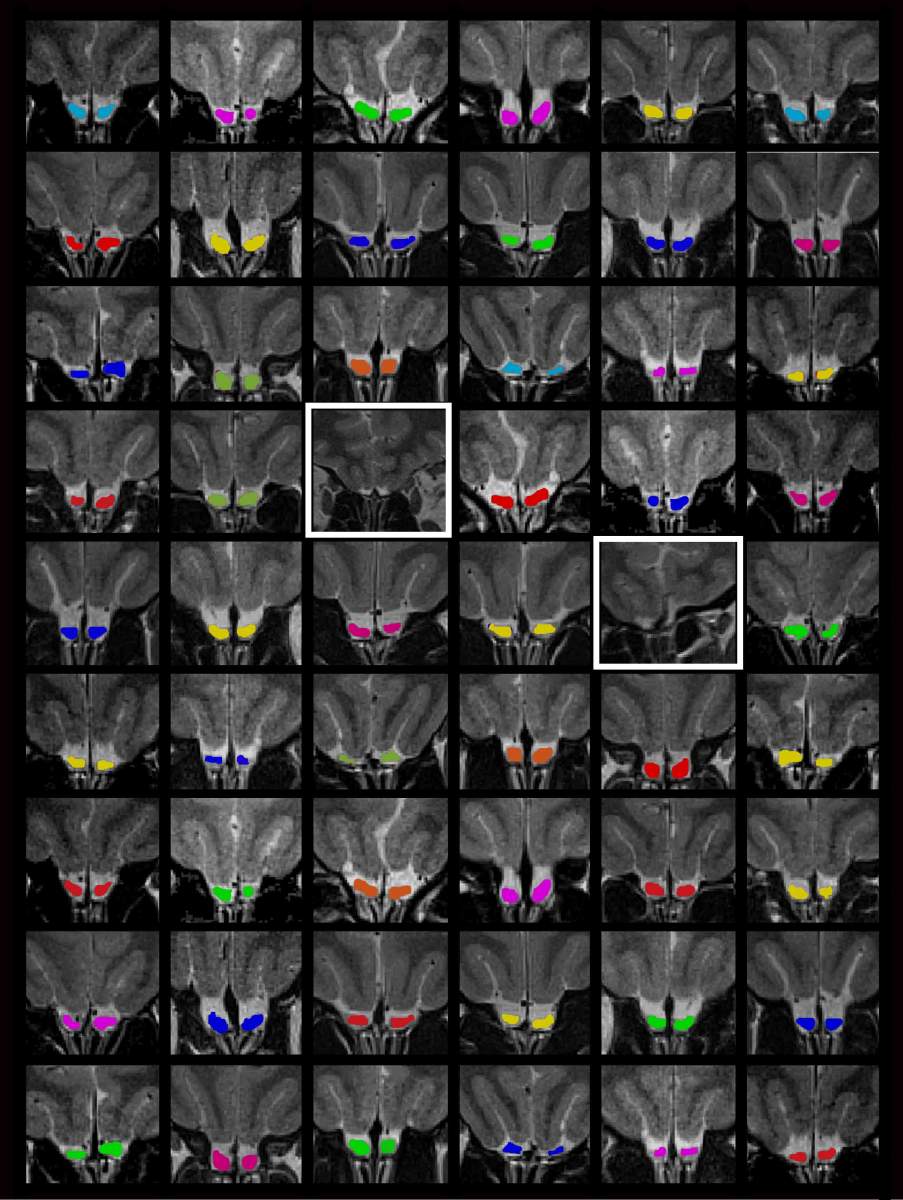
At first the researchers, led by Weiss and research student Timna Soroka, thought this might be the sort of exception that does not disprove the rule. They took functional MRI (fMRI) scans of her brain and compared them with those of a control group. But they needed a unique control group. Since the subject was female and left-handed – both traits that can influence the organisation of the brain – the researchers invited other left-handed women to have their brains scanned for comparison.
“When the ninth subject in the ‘control’ group also turned out to be lacking olfactory bulbs, alarm bells started ringing,” said Weiss.
According to Sobel the olfactory bulb, at around 58 mm cubed in volume, is visible to the naked eye in images, but if someone is not specifically looking for this structure, they are liable to miss it – or to miss its absence. In addition because the differences connected to handedness can complicate datasets, some researchers even stick to right-handers, assuming their findings on such things as the olfactory system will be relevant to left-handers as well.
They then started looking for evidence for this phenomenon and the team found it in an existing database: the Human Connectome Project. Out of the 1113 brain scans in this database, many being identical twins, some 10% are from left-handed individuals (around their incidence in the general population). Also among the records in this open database are the results of smell tests given to the subjects. Weiss and Soroka, with the help of Liav Tagania, a high school student working on an educational project in Sobel’s lab, searched through the information in the database. They did not find a single male who had both an intact sense of smell and a missing olfactory bulb, but they did find four women with both. Of those four women, two were left-handed.
“Even more amazing was the fact that the two left-handed women were identical twins, and their twin sisters did have olfactory bulbs. Each of those with no olfactory bulb in their brains scored better on the smell test than their intact twin sisters,” said Soroka.
How do these ‘exceptions to the rule’ square with the commonly held view of the sense of smell? There are several possible explanations. One is that the highly plastic brain creates a ‘smell map’ in a different part of these women’s brains. Another possible explanation is that these exceptions do disprove the rule.
“Current ideas posit the olfactory bulb as a ‘processing center’ for information that is complex and multi-dimensional, but it may be that our sense of smell works on a simpler principle, with fewer dimensions. It will take high resolution imaging – higher than that approved for use on humans today – to resolve that issue. But the fact remains that these women smell the world in the same way as the rest of us, and we don’t know how they achieve this,” concluded Sobel.
Also reported in: