Isotopes in iron oxides laid down two billion years ago hold clues to the conditions in which they were created – and they were not boiling – according to Weizmann Institute of Science researchers.
Geoscientists studying the conditions prevailing in Earth’s earliest oceans have been in disagreement for the past half century. Some, working backwards, think the first ocean was extremely hot – at least 70˚ Celsius – while others believe it was closer to the 15˚C we enjoy today.
The thing is, both camps rely on the same data – a trend in the oxygen isotope composition of minerals precipitated out of seawater, for example that found in the carbonate minerals in limestones – to reach these very different conclusions.
Different interpretations of the same datasets have led to two divergent explanations for the trend. In one, the oceans were much warmer than today and early seawater had an oxygen isotope composition much the same as today. In the other, the oceans’ temperature was similar to todays and the oxygen isotope composition of ancient seawater must have been different.
The isotope composition, in the case of oxygen, is measured as the ratio between two forms of oxygen: the common isotope, oxygen 16 (16O) and its rare, heavy form, oxygen 18 (18O).
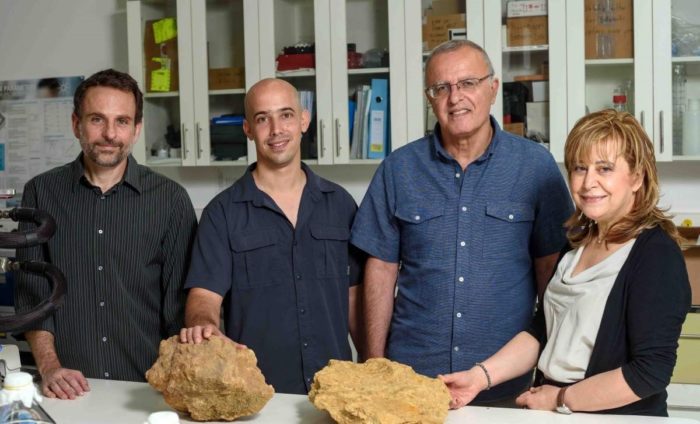
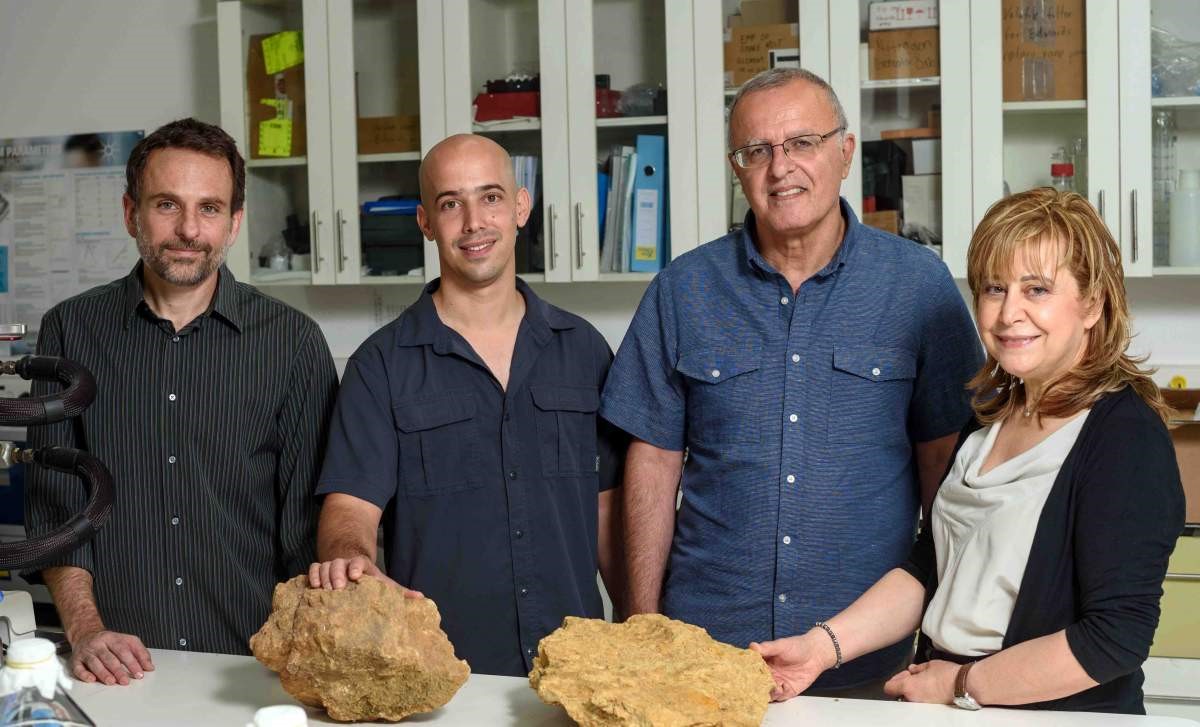
Nir Galili, a research student in the group of Professor Itay Halevy of the Weizmann’s Earth and Planetary Sciences Department sought to resolve the isotope – and thus the temperature – issue.
Finding an answer can provide clues to everything from the conditions under which primitive life forms evolved to the geologic history of seawater chemistry.
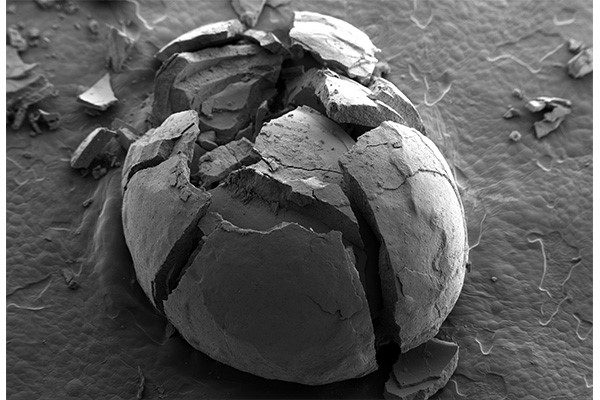
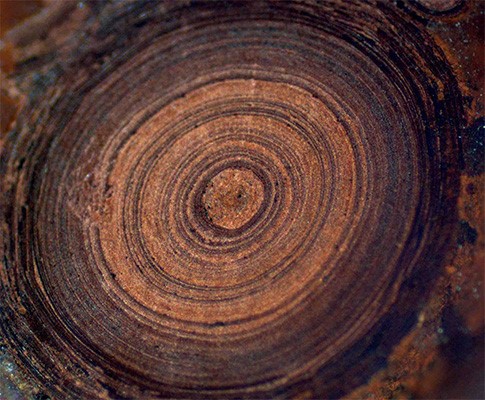
To investigate, he and Halevy turned to tiny ovoidal grains – ooids – composed of fine concentric layers of ancient iron oxides. To measure the oxygen isotope ratios, they turned to Professor Aldo Shemesh and Dr Ruth Yam in his group, of the same department.
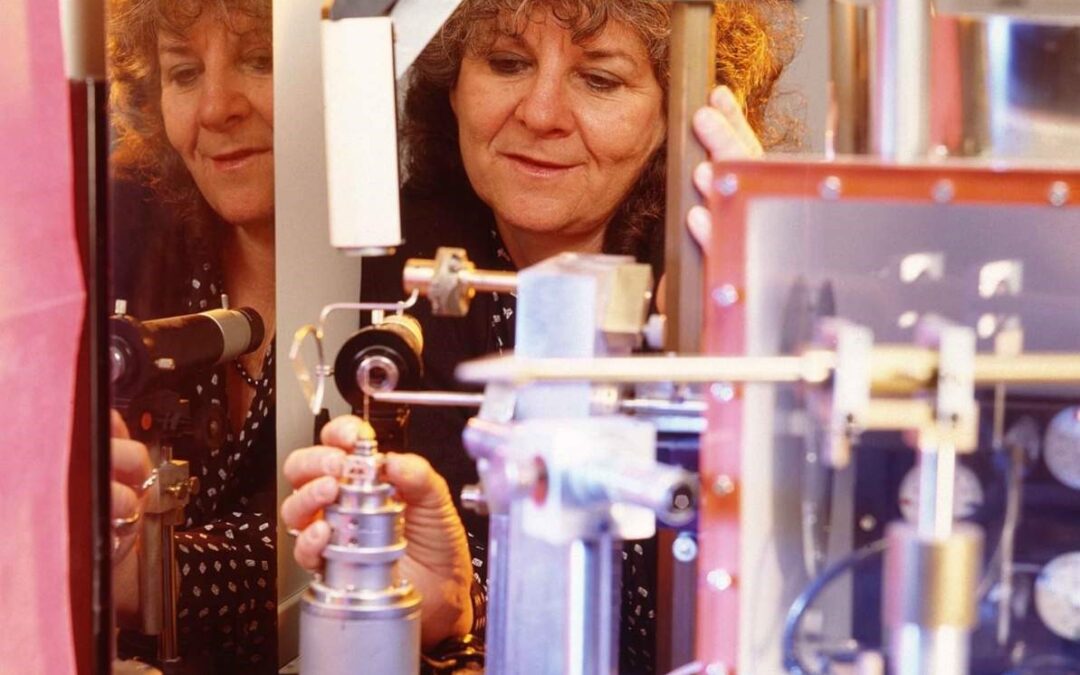
Shemesh and his group are experts in the precise analysis of isotopes in minuscule samples, and together they created a database of isotope compositions in different ooids.
“We developed and then tested these methods for accurately measuring isotope ratios in the tiny iron oxide samples, and this gave us a new tool that we did not previously have,” said Shemesh.
The ooids were collected from dozens of sites around the world and represented different geological periods – the oldest being around two billion years old. In one sense, the database is a sort of oceanic time capsule, and the researchers hoped to use it to create a sort of isotopic picture of the ocean in those early days, as well as the changes it has undergone since.
Two types of iron oxides were collected and analysed: goethite and hematite.
“But to understand what the results were telling us about the early oceans, we needed a way to link the numbers obtained from the oxides to ancient seawater,” said Halevy.
To do so, the group synthesized both oxides in the lab, over a range of temperatures, and measured the isotope ratios in these. This calibration then helped them take the data from the ancient rusty samples and reconstruct the oxygen isotope composition of seawater from two billion years ago to the present day.
The results showed that Earth’s oceans have become gradually enriched in 18O over time, by about one or two percent.
“We are talking about a relatively small difference between the isotopic composition of seawater today and in the deep past; this small difference has given rise to isotopic records in sedimentary rocks that parts of our scientific community have interpreted to reflect early oceans that were close to boiling. We now understand that this was not the case,” concluded Halvey.