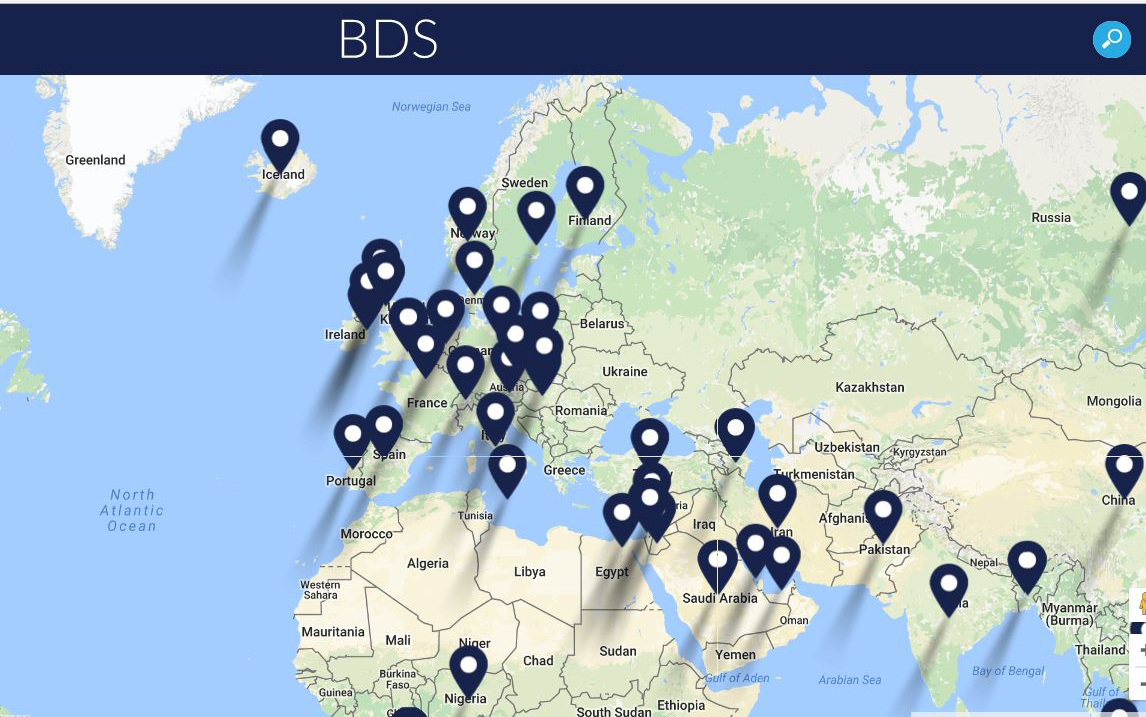
Building Dialog through Science, or BDS, (http://israelbds.org/) is the name of a new website from the Weizmann Institute of Science that features the many and varied scientific studies that rely on close collaboration between Israeli researchers and those in different countries.
These range from the SESAME synchrotron, a Middle-Eastern facility based in Jordan that serves life-sciences researchers from Egypt to Iran; efforts to discover the processes that lead up to the fantastic stellar explosions known as supernovae, in which Israeli researchers are alerted to possible events in the California night sky; brain research; quantum physics studies; scientific archaeology; and much more.
Featured on the website are popular articles that describe the history of Israeli-international scientific cooperation, research that has resulted from that cooperation and the people involved, as well links to scientific papers.
“Building dialog through science, rather than building walls, has always been our way of doing things,” said Weizmann Institute of Science President, Professor Daniel Zajfman.
“If we are going to work against the other BDS, we must do so with real information. That is the intent of the site we have created. When scientists cooperate in their research, they bring back to their countries an understanding of the ways people can work together on many levels – over and above the scientific – including respect for other cultures and a desire for peaceful coexistence. That is why we believe that cooperation between Israeli scientists and those in universities and research institutes around the globe must be preserved at all costs.”
The hope, indeed, is that anyone visiting the website will understand what the world stands to lose from cutting off ties to Israel’s researchers and preventing students and labs around the globe from enjoying the fruits of Israeli advances.
Valeria Ulisse, an Italian research student studying the development of the nervous system at the Weizmann Institute of Science sums it up: “In Italy I was in a really good lab but I was missing something internally. I wanted to improve my knowledge, to start a new project, to change my life and I found the place to do it.”
Indeed, Israeli science is open to collaboration with anyone, independent of their political opinions:
“Research thrives on the meeting of different world views, and it is important to preserve that freedom to meet and discuss, even with those with whom we don’t always agree,” Professor Zajfman said.