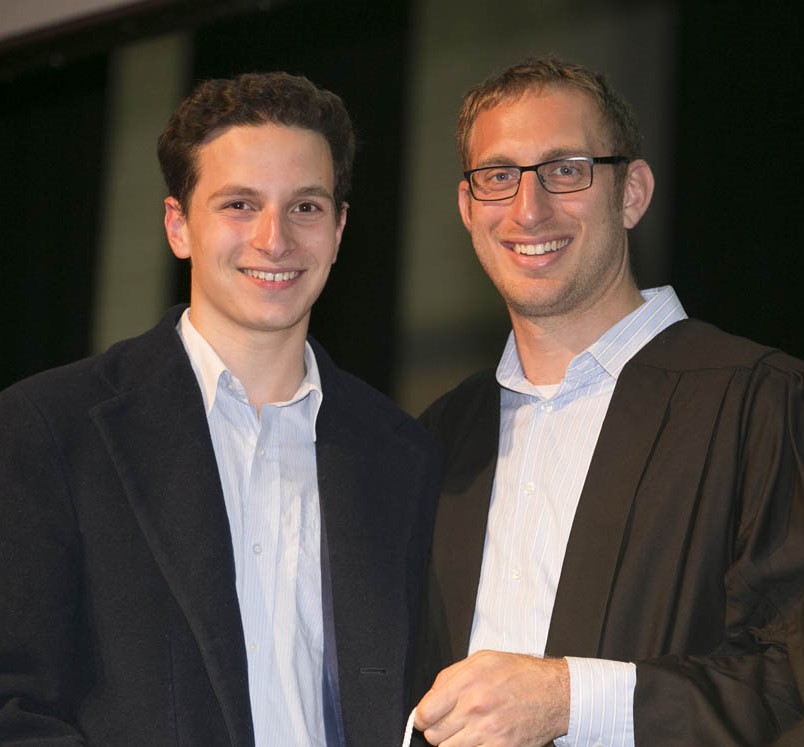
An 18 year old aspiring doctor from Moriah College has won Weizmann Australia’s prize for Excellence, Commitment and Curiosity in Science.
Sam Lees said he was thrilled, but very surprised, when his name was announced as the winner at the school’s recent prize giving event.
“There are so many talented scientists in my class, so I was little taken aback at being awarded the prize, but thrilled to be recognised in this way,” said Sam.
“I think it was the curiosity and commitment part that got me over the line as, although I am near the top in chemistry I am not at the top, but I am enthusiastic, engaged in class and always asking questions that sometimes throw the teachers off a bit!”
It was in fact former Moriah teacher – Mr MacFarlane – who triggered Sam’s curiosity in science.
“Mr MacFarlane really helped me develop an interest in science in year 7 and I found him very inspiring. He opened the door that helped me become more self-directed in my pursuit of the subject,” Sam said.
Sam has just completed applications to various universities to study medicine and hopes to receive some good news by December or January.
“I really want to be a doctor, so my chemistry will come in handy, but if for some reason I do not get in I will definitely take a science degree of some kind,” he said.
Although there are no doctors in his immediate family many of his cousins are pursuing careers in health.
“I am hoping to be the first doctor in my family so its fingers crossed. Either way science will definitely be part of my future,” he concluded.
Weizmann Australia is keen to engage with young scientific minds as early as possible. The Weizmann Australia Prize For Excellence, Commitment and Curiosity in Science – launched three years ago at a number of schools – is one way of doing so. For information about getting involved please email Kirsten Shteinman at kirsten@weizmann.org.au.